
- ASIC
- Battery management ICs
- Clocks and timing solutions
- ESD and surge protection devices
- Automotive Ethernet
- Evaluation Boards
- High reliability
- Isolation
- Memories
- Microcontroller
- Power
- RF
- Security and smart card solutions
- Sensor technology
- Small signal transistors and diodes
- Transceivers
- Universal Serial Bus (USB)
- Wireless connectivity
- Suchwerkzeuge
- Technologie
- Packages
- Produktinformationen
- Bezugsquellen
- Überblick
- Automotive Ethernet PHY for in-vehicle networking
- Automotive Ethernet Switches for in-vehicle networking
- Überblick
- Embedded flash IP solutions
- Flash+RAM MCP solutions
- F-RAM (Ferroelectric RAM)
- NOR flash
- nvSRAM (non-volatile SRAM)
- PSRAM – Pseudostatic RAM
- Radiation hardened and high-reliability memories
- SRAMs (Static Random Access Memory)
- Wafer and die memory solutions
- Überblick
- AURIX™ TriCore™ MCUs
- PSOC™ MCUs
- TRAVEO™ T2G MCUs
- XMC™ MCUs
- Legacy MCUs
- MOTIX™ motor control SoCs/SIPs
- Überblick
- AC-DC power conversion
- Automotive conventional powertrain ICs
- Class D audio amplifier ICs
- Contactless power and sensing ICs
- DC-DC converters
- Diodes and thyristors (Si/SiC)
- eFuses
- Gallium nitride (GaN)
- Gate Driver ICs
- IGBTs – Insulated gate bipolar transistors
- Intelligent power modules (IPM)
- JFETs
- LED driver ICs
- Motor drivers
- MOSFETs
- Power modules
- Power supply ICs
- Protection and monitoring ICs
- Silicon carbide (SiC)
- Smart power switches
- Solid state relays and isolators
- Wireless charging ICs
- Überblick
- Antenna cross switches
- Antenna tuners
- Bias and control
- Coupler
- Driver amplifiers
- Rad hard microwave and RF
- Low noise amplifiers (LNAs)
- RF diode
- RF switches
- RF transistors
- Wireless control receiver
- Überblick
- Calypso® products
- CIPURSE™ products
- Contactless memories
- OPTIGA™ embedded security solutions
- SECORA™ security solutions
- Security controllers
- Smart card modules
- Smart solutions for government ID
- Überblick
- ToF 3D image sensors
- Current sensors
- Gas sensors
- Inductive position sensors
- MEMS microphones
- Pressure sensors
- Radar sensors
- Magnetic position sensors
- Magnetic speed sensors
- Capacitive sensors
- Temperature sensors
- Battery sensors
- Digital X-ray
- Computed tomography
- Sensor interface ASICs
- Überblick
- Bipolar transistors
- Diodes
- Small signal/small power MOSFET
- Überblick
- Automotive transceivers
- Control communication
- Powerline communications
- Überblick
- USB 2.0 peripheral controllers
- USB 3.2 peripheral controllers
- USB hub controllers
- USB PD high-voltage microcontrollers
- USB-C AC-DC and DC-DC charging solutions
- USB-C charging port controllers
- USB-C Power Delivery controllers
- Überblick
- AIROC™ Automotive wireless
- AIROC™ Bluetooth® and multiprotocol
- AIROC™ connected MCU
- AIROC™ Wi-Fi + Bluetooth® combos
- AIROC™ Ultra-Wide Band Solutions
- Überblick
- Commercial off-the-shelf (COTs) memory portfolio
- Defense memory portfolio
- High-reliability power conversion and management
- Überblick
- NewSpace memory portfolio
- Radiation tolerant power
- Überblick
- Rad hard microwave and RF
- Radiation hardened power
- Space memory portfolio
- Überblick
- Parallel NOR flash
- SEMPER™ NOR flash family
- SEMPER™ X1 LPDDR flash
- Serial NOR flash
- Überblick
-
32-bit TriCore™ AURIX™ – TC2x
- Überblick
- AURIX™ family – TC21xL
- AURIX™ family – TC21xSC (wireless charging)
- AURIX™ family – TC22xL
- AURIX™ family – TC23xL
- AURIX™ family – TC23xLA (ADAS)
- AURIX™ family – TC23xLX
- AURIX™ family – TC264DA (ADAS)
- AURIX™ family – TC26xD
- AURIX™ family – TC27xT
- AURIX™ family – TC297TA (ADAS)
- AURIX™ family – TC29xT
- AURIX™ family – TC29xTT (ADAS)
- AURIX™ family – TC29xTX
- AURIX™ TC2x emulation devices
-
32-bit TriCore™ AURIX™ – TC3x
- Überblick
- AURIX™ family - TC32xLP
- AURIX™ family – TC33xDA
- AURIX™ family - TC33xLP
- AURIX™ family – TC35xTA (ADAS)
- AURIX™ family – TC36xDP
- AURIX™ family – TC37xTP
- AURIX™ family – TC37xTX
- AURIX™ family – TC38xQP
- AURIX™ family – TC39xXA (ADAS)
- AURIX™ family - TC39xXX/XP
- AURIX™ family – TC3Ex
- AURIX™ TC37xTE (emulation devices)
- AURIX™ TC39xXE (emulation devices)
- 32-bit TriCore™ AURIX™ – TC4x
- Überblick
- PSOC™ 4 Microcontroller: Arm® Cortex®-M0/M0+
- PSOC™ 4 HV Arm® Cortex®-M0+
- PSOC™ 5 LP Arm® Cortex®-M3
- PSOC™ 6 Arm® Cortex®-M4/M0+
- PSOC™ Multitouch Touchscreen Controller
- PSOC™ Control C3 Arm® Cortex®-M33
- PSOC™ Automotive 4: Arm® Cortex®-M0/M0+
- PSOC™ Edge Arm® Cortex® M55/M33
- PSOC™ Control C1 Arm® Cortex®-M0
- Überblick
- 32-bit TRAVEO™ T2G Arm® Cortex® for body
- 32-bit TRAVEO™ T2G Arm® Cortex® for cluster
- Überblick
- 32-bit XMC1000 industrial microcontroller Arm® Cortex®-M0
- 32-bit XMC4000 industrial microcontroller Arm® Cortex®-M4
- XMC5000 Industrial Microcontroller Arm® Cortex®-M4F
- 32-bit XMC7000 Industrial Microcontroller Arm® Cortex®-M7
- Überblick
- Legacy 32-bit MCU
- Legacy 8-bit/16-bit microcontroller
- Other legacy MCUs
- 32-bit FM Arm® Cortex® Microcontroller
- Sensing controllers
- Überblick
- AC-DC integrated power stage - CoolSET™
- AC-DC PWM and PFC controller
- Überblick
- Bridge rectifiers & AC switches
- CoolSiC™ Schottky diodes
- Diode bare dies
- Silicon diodes
- Thyristor / Diode Power Modules
- Thyristor soft starter modules
- Thyristor/diode discs
- Überblick
- GaN bidirectional switches
- GaN smart
- GaN transistors (GaN HEMTs)
- GaN with integrated driver
- GaN bare dies
- Überblick
- Automotive gate driver ICs
- Gate Driver ICs for GaN HEMTs
- Gate Driver ICs for SiC MOSFETs
- Half-Bridge Gate Driver ICs
- High-Side Gate Driver ICs
- Isolated Gate Driver ICs
- Level-Shift Gate Driver ICs
- Low-Side Gate Driver ICs
- Three-Phase Gate Driver ICs
- Transformer Driver ICs
- Überblick
- AC-DC LED driver ICs
- Ballast IC
- DC-DC LED driver IC
- LED dimming interface IC
- Linear LED driver IC
- LITIX™ - Automotive LED Driver IC
- NFC wireless configuration IC with PWM output
- VCSEL driver
- Überblick
- BLDC motor drivers
- BDC motor drivers
- Stepper & servo motor drivers
- Motor drivers with MCU
- Bridge drivers with MOSFETs
- Gate Driver ICs
- Überblick
- Automotive MOSFET: 30 V to 800 V
- Dual MOSFETs
- MOSFET (Si & SiC) Modules
- N-channel depletion mode MOSFET
- N-channel MOSFETs
- P-channel MOSFETs
-
Silicon carbide CoolSiC™ MOSFETs
- Überblick
- Silicon Carbide MOSFET modules
- Silicon carbide MOSFET discretes
- Silicon carbide MOSFETs bare dies
- Silicon Carbide Bidirectional Switches
- 400 V / 440 V Silicon Carbide MOSFETs
- 650 V Silicon Carbide MOSFETs
- 750 V Silicon Carbide MOSFETs
- 1200 V Silicon Carbide MOSFETs
- 1700 V Silicon Carbide MOSFETs
- 2000 V Silicon Carbide MOSFETs
- 2300 V Silicon Carbide MOSFETs
- 3300 V Silicon Carbide MOSFETs
- Small signal/small power MOSFET
- Überblick
- IGBT modules
- MOSFET (Si & SiC) Modules
- Intelligent power modules (IPM)
- Diodes and thyristors (Si/SiC)
- Automotive IGBT and CoolSiC™ MOSFET modules
- High density power modules
- Überblick
- Automotive transceivers
- Linear voltage regulators
- Power management ICs (PMIC)
- Automotive switching regulators
- System Basis Chips (SBC)
- Überblick
- High-side switches
- Low-side switches
- Multichannel SPI Switches & Controller
- Automotive eFuses
- Überblick
- Radar sensors for automotive
- Radar sensors for IoT
- Überblick
- EZ-USB™ CX3 MIPI CSI2 to USB 3.0 camera controller
- EZ-USB™ FX10 & FX5N USB 10Gbps peripheral controller
- EZ-USB™ FX20 USB 20 Gbps peripheral controller
- EZ-USB™ FX3 USB 5 Gbps peripheral controller
- EZ-USB™ FX3S USB 5 Gbps peripheral controller with storage interface
- EZ-USB™ FX5 USB 5 Gbps peripheral controller
- EZ-USB™ SD3 USB 5 Gbps storage controller
- EZ-USB™ SX3 FIFO to USB 5 Gbps peripheral controller
- Überblick
- EZ-PD™ PMG1-B1 Battery Charge Controller with USB-C PD MCU
- EZ-PD™ PMG1-S0 high-voltage MCU with USB-C and PD
- EZ-PD™ PMG1-S1 high-voltage MCU with USB-C and PD
- EZ-PD™ PMG1-S2 high-voltage MCU with USB PD
- EZ-PD™ PMG1-S3 high-voltage MCU with USB-C & PD
- EZ-PD™ PMG1-B2 Battery Charge Controller with USB-C PD MCU
- Überblick
- EZ-PD™ CCG3 USB type-C port controller PD
- EZ-PD™ CCG3PA USB-C and PD
- EZ-PD™ CCG3PA-NFET USB-C PD controller
- EZ-PD™ CCG7x consumer USB-C Power Delivery & DC-DC controller
- EZ-PD™ PAG1: power adapter generation 1
- EZ-PD™ PAG2: Power Adapter Generation 2
- EZ-PD™ PAG2-PD USB-C PD Controller
- Überblick
- EZ-PD™ ACG1F one-port USB-C controller
- EZ-PD™ CCG2 USB Type-C port controller
- EZ-PD™ CCG3PA Automotive USB-C and Power Delivery controller
- EZ-PD™ CCG4 two-port USB-C and PD
- EZ-PD™ CCG5 dual-port and CCG5C single-port USB-C PD controllers
- EZ-PD™ CCG6 one-port USB-C & PD controller
- EZ-PD™ CCG6_CFP and EZ-PD™ CCG8_CFP Dual-Single-Port USB-C PD
- EZ-PD™ CCG6DF dual-port and CCG6SF single-port USB-C PD controllers
- EZ-PD™ CCG7D Automotive dual-port USB-C PD + DC-DC controller
- EZ-PD™ CCG7S Automotive single-port USB-C PD solution with a DC-DC controller + FETs
- EZ-PD™ CCG8 dual-single-port USB-C PD
- EZ-PD™ CMG1 USB-C EMCA controller
- EZ-PD™ CMG2 USB-C EMCA controller with EPR
Nach Architektur durchsuchen
Nach Technologien durchsuchen
- AKTUELLES IN
- Aerospace and defense
- AI and data center
- Automotive
- Communications
- Consumer electronics
- Industrial
- Security solutions
- Smart home and building
- Solutions
- Überblick
- Defense applications
- Space applications
- Überblick
- Data center power solutions
- Edge computing
- Machine Learning Edge AI
- Überblick
- ADAS & autonomous driving
- Automotive body electronics
- Automotive LED lighting systems
- Automotive zonal architecture
- Chassis control & safety
- Electric vehicle drivetrain system
- EV thermal management system
- In-vehicle infotainment & HMI
- Light electric vehicle solutions
- Überblick
- Satellite communications
- Telecommunications infrastructure
- Überblick
- AR and smart glasses
- Complete system solutions for smart TVs
- Consumer Wearables
- Drones
- Home appliances
- Mobile device and smartphone solutions
- Photovoltaic
- Power adapters and chargers
- Semiconductor solutions for home entertainment applications
- Smart conference systems
- Überblick
- Asset Tracking
- Battery energy storage (BESS)
- Battery formation and testing
- Digital health
- Electric forklifts
- EV charging
- High voltage solid-state power distribution
- Hydrogen electrolysis
- Industrial & Medical SMPS
- Industrial automation
- Industrial motor drives and controls
- Industrial robots
- LED lighting system design
- Light electric vehicle solutions
- Photovoltaic
- Power adapters and chargers
- Power tools
- Power transmission and distribution
- Robotics
- Traction
- Uninterruptible power supplies (UPS)
- Wind power
- Überblick
- Access control and ticketing
- Device authentication and brand protection
- Embedded security for the Internet of Things (IoT)
- eSIM applications
- Government identification
- Mobile security
- Payment solutions
- Überblick
- Domestic robots
- Heating ventilation and air conditioning (HVAC)
- Home and building automation
- PC accessories
- Semiconductor solutions for home entertainment applications
- Überblick
- Battery management systems (BMS)
- Connectivity
- Human Machine Interface
- Machine Learning Edge AI
- Motor control
- Power conversion
- Security
- Sensor solutions
- System diagnostics and analytics
- Überblick
- Data center power distribution
- FPGAs in datacenter applications
- Power system reliability modeling
-
Server rack power management
- Überblick
- AI accelerator cards
- AMD CPU voltage regulator Ics
- Ampere CPU voltage regulator Ics
- Intel CPU voltage regulator Ics
- Intermediate Bus Converter (IBC)
- Network switches for AI data centers and server racks
- Server battery backup units (BBU)
- Server power path protection
- Server power supply units (PSU)
- SmartNIC cards
- Überblick
- Automotive animated LED lighting system
- Automotive LED front single light functions
- Automotive LED rear single light functions
- Full LED headlight system - multi-channel LED driver
- LED driver solutions for electric two- and three-wheelers
- LED pixel light controller - supply & communication
- Static interior ambient LED light
- Überblick
- Active suspension control
- Automotive braking solutions
- Automotive steering solutions
- Chassis domain control
- Überblick
-
Automotive battery management system
- Überblick
- Automotive battery cell monitoring & balancing
- Automotive battery control unit (BCU)
- Automotive battery isolated communication
- Automotive battery management system (BMS) - 12 V to 24 V
- Automotive battery management system (BMS) - 48 V
- Automotive battery management system (BMS) - high-voltage
- Automotive battery pack monitoring
- Automotive battery passport & event logging
- Automotive battery protection & disconnection
- Automotive current sensing & coulomb counting
- BMS (electric two- & three-wheelers)
- Auxiliary inverter
- Auxiliary inverter - high-voltage (commercial vehicles)
- DC-DC converter high-voltage
- DC-DC converter high-voltage (commercial vehicles)
- EV charging
- EV traction inverter
- FCEV powertrain solutions
- On-board charging (electric commercial vehicles)
- On-board charging (OBC)
- On-board charging (OBC) solutions for electric two- and three-wheelers
- Traction inverter (electric commercial vehicles)
- Traction inverter (electric two- & three-wheelers)
- Überblick
- Audio amplifier solutions
- Complete system solutions for smart TVs
- Distribution audio amplifier unit solutions
- Home theater installation speaker system solutions
- Party speaker solutions
- PoE audio amplifier unit solutions
- Portable speaker solutions
- Powered active speaker systems
- Remote control
- Smart speaker designs
- Soundbar solutions
- Überblick
- Disposable healthcare equipment
- Durable healthcare equipment
- Healthcare wearables
- Überblick
- Data center power solutions
- Digital input/output (I/O) modules
- DIN rail power supply solutions
- Home and building automation
- Industrial HMI Monitors and Panels
- Industrial motor drives and controls
- Industrial PC
- Industrial robots
- Machine vision
- Mobile robots (AGV, AMR)
- Programmable logic controller (PLC)
- Solid-state circuit breaker (SSCB)
- Uninterruptible power supplies (UPS)
- Überblick
- AC-DC power conversion
- DC-DC power conversion
- Überblick
- Power supply health monitoring
- AKTUELLES IN
- Digital documentation
- Boards & Kits
- Finder & selection tools
- Platforms
- Services
- Simulation & Modeling
- Software
- Tools
- Partners
- Maker
- University Alliance Program
- Überblick
- Bipolar Discs Finder
- Bipolar Module Finder
- Connected Secure Systems Finder
- Diode Rectifier Finder
- ESD Protection Finder
- Evaluation Board Finder
- Gate Driver Finder
- IGBT Discrete Finder
- IGBT Module Finder
- IPM Finder
- Microcontroller Finder
- MOSFET Finder
- PMIC Finder
- Product Finder
- PSOC™ and FMx MCU Board & Kit Finder
- Radar Finder
- Reference Design Finder
- Simulation Model Finder
- Smart Power Switch Finder
- Transceiver Finder
- Voltage Regulator Finder
- Wireless Connectivity Board & Kit Finder
- Infineon Gate Driver Recommendation Tool
- Überblick
- AIROC™ software & tools
- AURIX™ software & tools
- DRIVECORE™ for automotive software development
- iMOTION™ software & tools
- Infineon Smart Power Switches & Gate Driver Tool Suite
- MOTIX™ software & tools
- OPTIGA™ software & tools
- PSOC™ software & tools
- TRAVEO™ software & tools
- XENSIV™ software & tools
- XMC™ software & tools
- Überblick
- HiRel Fit Rate Tool
- Infineon Designer
- Interactive product sheet
- IPOSIM Online Power Simulation Platform
- InfineonSpice Offline Simulation Tool
- OPTIREG™ automotive power supply ICs Simulation Tool (PLECS)
- Power MOSFET Simulation Models
- PowerEsim Switch Mode Power Supply Design Tool
- Solution Finder
- XENSIV™ Magnetic Sensor Simulation Tool
- Überblick
- Configuration
- Hardware Development
- Programming & Testing
- SDK
- Tools Archive
- Utilities
- Überblick
- AURIX™ certifications
- AURIX™ development tools
-
AURIX™ Embedded Software
- Überblick
- AURIX™ Applications software
- AURIX™ Artificial Intelligence
- AURIX™ Gateway
- AURIX™ iLLD Drivers
- Infineon safety
- AURIX™ Security
- AURIX™ TC3xx Motor Control Application Kit
- AURIX™ TC4x SW application architecture
- Infineon AUTOSAR
- Communication and Connectivity
- Middleware
- Non AUTOSAR OS/RTOS
- OTA
- AURIX™ Microcontroller Kits
- Überblick
- TRAVEO™ Development Tools
- TRAVEO™ Embedded Software
- Überblick
- XENSIV™ Development Tools
- XENSIV™ Embedded Software
- XENSIV™ evaluation boards
- Überblick
- CAPSENSE™ Controllers Code Examples
- Memories for Embedded Systems Code Examples
- PSOC™ 1 Code Examples for PSOC™ Designer
- PSOC™ 3 Code Examples for PSOC™ Creator
- PSOC™ 3/4/5 Code Examples
- PSOC™ 4 Code Examples for PSOC™ Creator
- PSOC™ 6 Code Examples for PSOC™ Creator
- PSOC™ 63 Code Examples
- USB Controllers Code Examples
- Überblick
- AIROC™ Wi-Fi & Bluetooth EZ-Serial Module Firmware Platform
- AIROC™ Wi-Fi & Bluetooth Linux and Android Drivers
- emWin Graphics Library and GUI for PSOC™
- Infineon Complex Device Driver for Battery Management Systems
- Memory Solutions Hub
- PSOC™ 6 Peripheral Driver Library (PDL) for PSOC™ Creator
- USB Controllers EZ-USB™ GX3 Software and Drivers
- Überblick
- CAPSENSE™ Controllers Configuration Tools EZ-Click
- DC-DC Integrated POL Voltage Regulators Configuration Tool – PowIRCenter
- EZ-USB™ SX3 Configuration Utility
- FM+ Configuration Tools
- FMx Configuration Tools
- Tranceiver IC Configuration Tool
- USB EZ-PD™ Configuration Utility
- USB EZ-PD™ Dock Configuration Utility
- USB EZ-USB™ HX3C Blaster Plus Configuration Utility
- USB UART Config Utility
- XENSIV™ Tire Pressure Sensor Programming
- Überblick
- EZ-PD™ CCGx Dock Software Development Kit
-
FMx Softune IDE
- Überblick
- RealOS™ Real-Time Operating System
- Softune IDE Language tools
- Softune Workbench
- Tool Lineup for F2MC-16 Family SOFTUNE V3
- Tool Lineup for F2MC-8FX Family SOFTUNE V3
- Tool Lineup for FR Family SOFTUNE V6
- Virtual Starter Kit
- Windows 10 operation of released SOFTUNE product
- Windows 7 operation of released SOFTUNE product
- Windows 8 operation of released SOFTUNE product
- Infineon GUI Designer
- ModusToolbox™ Software
- PSOC™ Creator Software
- Radar Development Kit
- RUST
- USB Controllers SDK
- Wireless Connectivity Bluetooth Mesh Helper Applications
- XMC™ DAVE™ Software
- Überblick
- AIROC™ Bluetooth® Connect App Archive
- Cypress™ Programmer Archive
- EZ-PD™ CCGx Power Software Development Kit Archive
- ModusToolbox™ Software Archive
- PSOC™ Creator Archive
- PSOC™ Designer Archive
- PSOC™ Programmer Archive
- USB EZ-PD™ Configuration Utility Archives
- USB EZ-PD™ Host SDK Archives
- USB EZ-USB™ FX3 Archive
- USB EZ-USB™ HX3PD Configuration Utility Archive
- WICED™ Smart SDK Archive
- WICED™ Studio Archive
- Überblick
- Infineon Developer Center Launcher
- Infineon Register Viewer
- Pin and Code Wizard
- Timing Solutions
- Wireless Connectivity
- AKTUELLES IN
- Support
- Training
- Infineon Developer Community
- Neueste Nachrichten
Wirtschaftspresse
Okt. 14, 2026
Wirtschaftspresse
Okt. 07, 2026
Wirtschaftspresse
Okt. 05, 2026
Wirtschaftspresse
Okt. 01, 2026
- Unternehmen
- Unsere Geschichten
- Events
- Presse
- Investor
- Karriere
- Qualität
- Neueste Nachrichten
Wirtschaftspresse
Okt. 14, 2026
Wirtschaftspresse
Okt. 07, 2026
Wirtschaftspresse
Okt. 05, 2026
Wirtschaftspresse
Okt. 01, 2026
Infineon stärkt Sicherheit für Physical AI mit zertifizierter TPM-Lösung und quantenresistenter Hardware-Sicherheit für NVIDIA-Robotikplattform Jetson Thor
Wirtschaftspresse
München, 3. Juni 2026 – Die Infineon Technologies AG integriert sein Hardware-Sicherheitsmodul OPTIGA™ TPM SLB 9672 in die Rechenplattformen für Robotik und autonome Systeme Jetson Thor von NVIDIA. Das Modul sichert kryptografische Schlüssel direkt auf Chip-Ebene und schützt so die Systemintegrität gegen Manipulation und unbefugten Zugriff. Das Ergebnis ist eine zertifizierte, quantenresistente Vertrauensbasis, die sogenannte Root of Trust, auf der künftige Physical-AI-Systeme aufgebaut werden können. Da Roboter und autonome Maschinen zunehmend abgeschirmte Industrieumgebungen verlassen und in Fabriken, Logistikzentren und öffentlichen Räumen operieren, steigen nicht nur die Sicherheitsanforderungen, sondern auch die wirtschaftlichen Risiken. Ein Cyberangriff kann Betriebsunterbrechungen und Haftungsansprüche nach sich ziehen, die weit über einen klassischen Datenverlust hinausgehen. Für Hersteller und Betreiber von Robotersystemen ist die Wahl der Sicherheitsarchitektur deshalb keine rein technische Entscheidung. Sie beeinflusst die langfristige Wettbewerbsfähigkeit, die Zulassungsfähigkeit in regulierten Märkten sowie die Gesamtbetriebskosten über den vollständigen Produktlebenszyklus.
„Roboter, die die reale Welt wahrnehmen, analysieren und auf sie reagieren, sind nur so vertrauenswürdig wie die Sicherheitsbasis, auf der sie aufgebaut sind", sagt Dr. Stephan Zizala, Divisionspräsident Connected Secure Systems bei Infineon. „Das OPTIGA TPM von Infineon verankert eine hardwarebasierte Vertrauensbasis in der NVIDIA Jetson-Thor-Plattform, die sich bereits in Hunderten Millionen von Geräten weltweit bewährt hat. Damit erfüllt die Integration die besonderen Anforderungen industrieller Robotik: lange Lebenszyklen, Echtzeitfähigkeit und einen zuverlässigen Betrieb im großen Maßstab. Die darin integrierte Post-Quantum-Kryptografie stellt sicher, dass diese Grundlage nicht nur gegen aktuelle Bedrohungen gewappnet ist, sondern über die gesamte Lebensdauer jedes Roboters hinweg Schutz bietet.“
„Physical-AI-Systeme agieren in der realen Welt, in der Sicherheit eine grundlegende Voraussetzung ist“, sagt Deepu Talla, Vice President Robotics and Edge AI bei NVIDIA. „Das zertifizierte OPTIGA TPM von Infineon für NVIDIA Jetson Thor unterstützt Entwickler dabei, kryptografische Schlüssel zu schützen, die Integrität der Software zu verifizieren und Roboterflotten im großen Maßstab gesichert bereitzustellen. Dadurch entsteht eine hardwarebasierte Vertrauensbasis – die Grundlage für gesicherte und resiliente autonome Systeme.“
Der EU Cyber Resilience Act, der EU AI Act, die Norm IEC 62443 für industrielle Systeme sowie branchenspezifische Standards im Gesundheitswesen und in der Automotive-Industrie führen zu neuen Anforderungen an nachweisbare und auditierbare Sicherheit auf Hardwareebene. Dadurch entsteht eine durch regulatorische Vorgaben und Compliance-Anforderungen getriebene Nachfrage, die Infineon und NVIDIA gezielt adressieren können.
Die OPTIGA TPM-Technologie bietet eine physisch isolierte, nach FIPS und Common Criteria zertifizierte Lösung, die vom Anwendungsprozessor getrennt ist. Sie ermöglicht einen gemessenen Systemstart (Measured Boot) sowie eine Fernbeglaubigung (Remote Attestation), sodass Betreiber und Aufsichtsbehörden zu jedem Zeitpunkt des Betriebs eines Systems kryptografisch verifizieren können, ob der Software-Stack authentisch und unverändert ist. Darüber hinaus stellt sie hardwaregeschützten Speicher für proprietäre KI-Modellschlüssel, verschlüsselte Kommunikation sowie kryptografisch signierte Over-the-Air-Updates bereit.
Das OPTIGA TPM, das branchenweit erste TPM mit einem postquanten-gesicherten Firmware-Update-Mechanismus, wurde als Root of Trust konzipiert, die auch bei sich wandelnden kryptografischen Bedrohungslagen nicht kompromittierbar ist. Entwickler, die Physical-AI-Anwendungen auf der Jetson-Thor-Plattform von NVIDIA entwickeln, können sich auf die bereits in der Architekturphase verankerte hardwarebasierte Sicherheitsgrundlage verlassen und bleiben so gegen aktuelle wie zukünftige kryptografische Bedrohungen in Robotersystemen geschützt.
Die Roadmap zur vollständigen Post-Quanten-Sicherheit wird durch das OPTIGA TPM der nächsten Generation von Infineon abgerundet. Das TPM integriert Algorithmen wie ML-KEM und ML-DSA, die 2024 vom US-amerikanischen National Institute of Standards and Technology (NIST) standardisiert wurden. Unternehmen, die heute auf dem aktuellen OPTIGA TPM aufbauen, können künftig einen reibungslosen Übergang vollziehen. Für die Robotik-Branche ist dies über die technische Bereitschaft hinaus von Bedeutung. Die regulatorischen Rahmenbedingungen für Physical AI entwickeln sich bereits in Richtung einer verpflichtenden PQC-Konformität. Die zu Beginn getroffene Architekturentscheidung bestimmt daher, ob eine eingesetzte Roboterflotte diese Anforderungen über ihre gesamte Einsatzdauer hinweg erfüllen kann oder bei Inkrafttreten entsprechender Vorschriften mit kostspieligen Hardware-Eingriffen konfrontiert wird.
Humanoide Roboter sind auf eine Kette von Halbleiterfunktionen angewiesen, um gesichert und zuverlässig wahrzunehmen, zu denken und zu handeln – von der Sensorik über die Aktorik und das Energiemanagement bis hin zu Konnektivität und Sicherheit. Infineon adressiert all diese Funktionsbereiche mit einem breiten Portfolio spezieller Lösungen, wobei der geschätzte Halbleiteranteil pro humanoidem Roboter bei rund 500 US-Dollar liegt. Sicherheit ist kein optionales Merkmal, sondern die Grundlage moderner Robotik. Infineon baut den Schutzschild gegen die Bedrohungen von morgen. Sicherheitskomponenten, darunter TPMs, nehmen dabei einen immer größeren Anteil dieses Bestands ein, da die regulatorischen Anforderungen zunehmend an Bedeutung gewinnen. In Zusammenarbeit mit Ökosystempartnern wie NVIDIA unterstützt Infineon Roboterentwickler und -hersteller beim Übergang von Laboranwendungen zur Flottenbereitstellung in Industrie-, Gesundheits- und Logistikumgebungen.
Verfügbarkeit
Ein Referenzdesign für das OPTIGA TPM SLB 9672 ist verfügbar. Weitere Informationen sind erhältlich unter www.Infineon.com/OPTIGA-TPM-SLB9672, www.infineon.com/pqc und www.infineon.com/cra
Die Infineon Technologies AG ist ein weltweit führender Anbieter von Halbleiterlösungen für Power Systems und das Internet der Dinge (IoT). Mit seinen Produkten und Lösungen treibt Infineon die Dekarbonisierung und Digitalisierung voran. Das Unternehmen hat weltweit rund 57.000 Beschäftigte (Ende September 2025) und erzielte im Geschäftsjahr 2025 (Ende September) einen Umsatz von rund 14,7 Milliarden Euro. Infineon ist in Frankfurt unter dem Symbol „IFX“ und in den USA im Freiverkehrsmarkt OTCQX International unter dem Symbol „IFNNY“ notiert.
Pressefotos

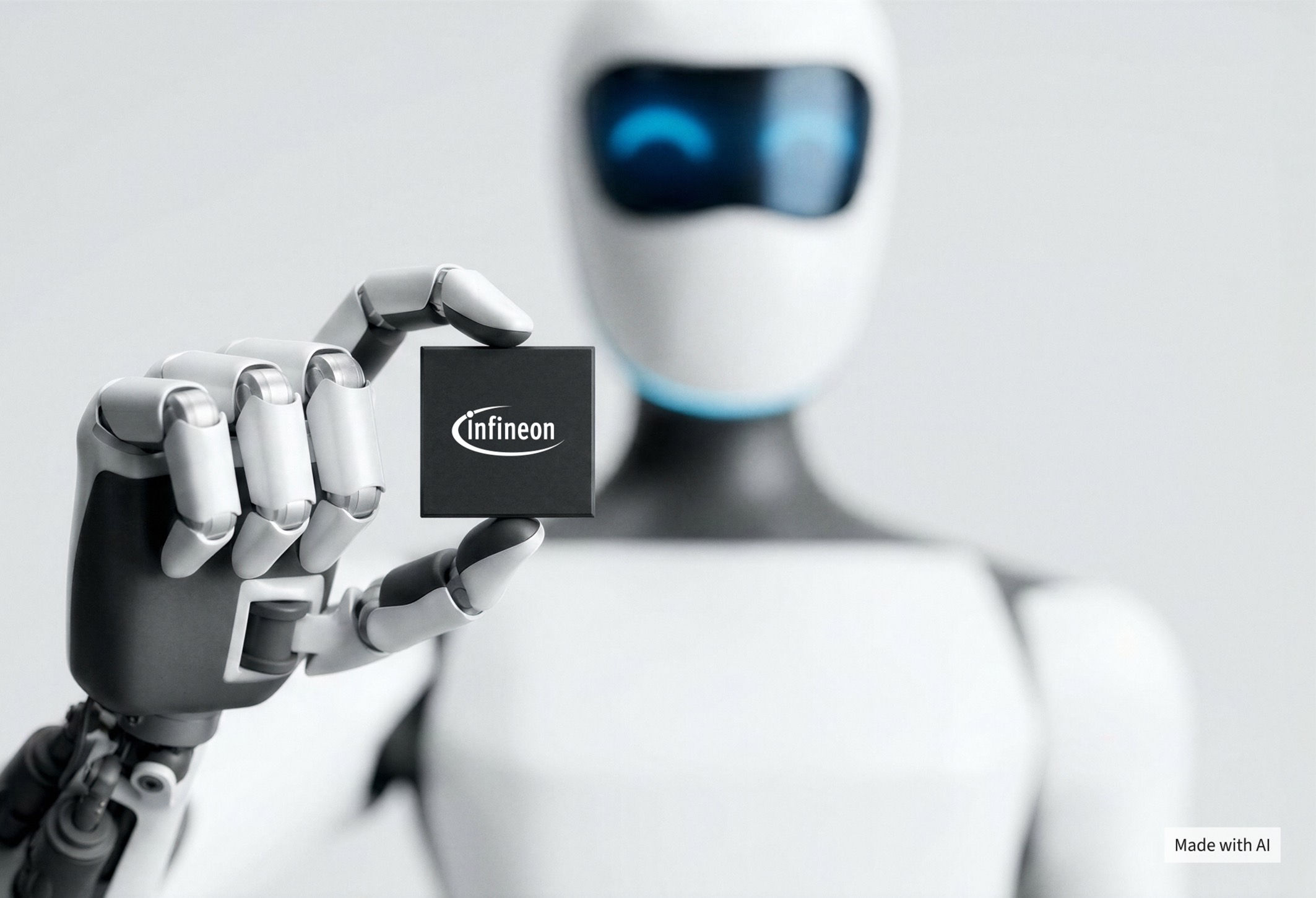
Mit Partnern wie NVIDIA hilft Infineon Robotikherstellern, den Schritt vom Pilotprojekt in die Serienproduktion zu schaffen.
JPEG
2126x1451 px
Share in WeChat
Scan the QR code with your WeChat App to share this page.
Information Number : infxx202606-104

Michael Burner
Spokesperson Consumer, Compute and Communication, PSS Division
+49 89 234 39300